

Does your home feel cramped or outdated? Tearing down a wall is one of the most effective ways to open up a floor plan and create a modern, spacious environment. Watch any home improvement show, and you will see walls coming down to merge rooms or expand kitchens.
But before you swing the sledgehammer, you must understand the risks. Removing the wrong wall can cause your roof to sag or your home to collapse. This guide explains why you need an expert to identify load-bearing walls and the hidden dangers lurking inside them.
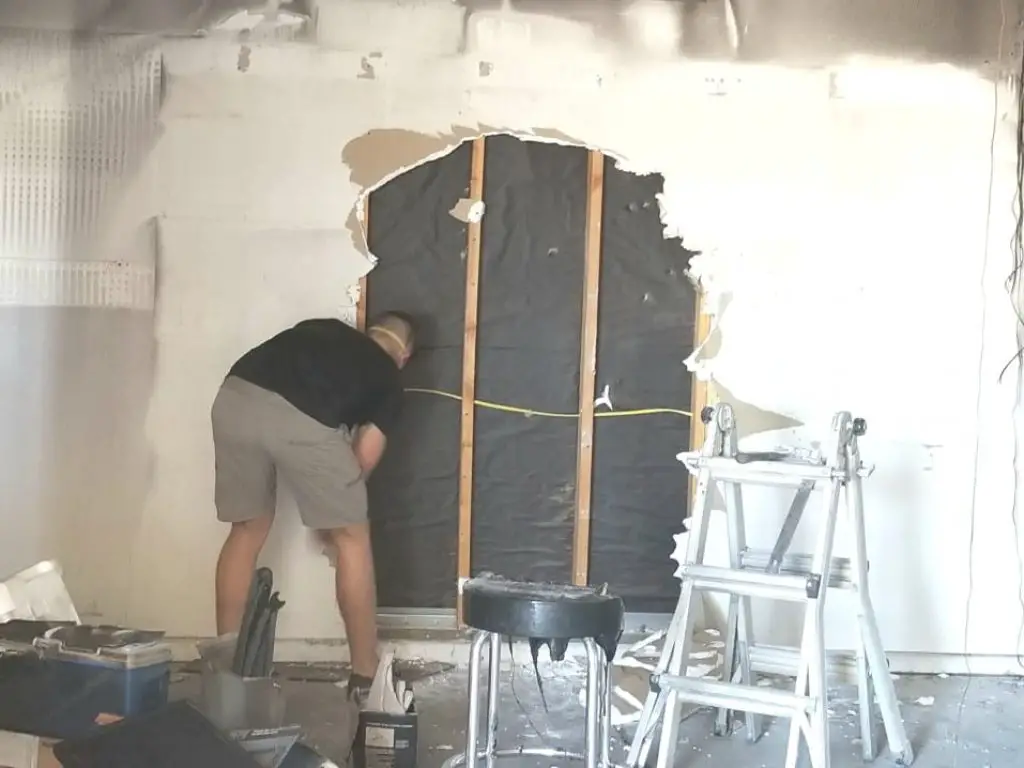
Clues That a Wall is Load-Bearing.
All walls are the same for an average homeowner with zero engineering knowledge. However, this is far from the truth. Some are considered load-bearing, while others are not. But what exactly does it mean?
Simply put, a load-bearing one is part of the structure of the home. Its primary role is to support the weight above it, including the roof and ceiling. It also supports the floors as well as the foundations. They have the same purpose as the support columns we are familiar with. That is why you cannot remove a load-bearing structure without any replacement support in place. It will affect the structural integrity of your home.
The only role of a non-load bearing is to divide or separate spaces of a house. It is also known as a partition. If you remove one without installing any support, nothing else in your home will be affected.
Why you need an engineer
It can be difficult for the average homeowner to identify load-bearing ones and only serve as partitions. Unfortunately, knocking and using a stethoscope for hearing if it is hollow or not is never the right way to do it. Keep this in mind if you want to find out if it is load-bearing or not:
1. Exterior sides are likely to be load bearing.
Even if you have added an extension, the original exterior walls likely remain structural supports for the roof or upper floors.
2. Check the lowest section of the house for support systems.
Check the basement or crawlspace. If there is a beam, column, or concrete footer directly beneath the wall you want to remove, that wall is likely transferring weight from the house down to the foundation. Look for portions directly connected to foundations.
3. Look for the joists.
Go to the attic or basement and look at the floor joists. If the wall runs perpendicular (at a 90-degree angle) to the joists, it is likely bearing weight. If the wall runs parallel, it is usually a partition, though not always.
4. Check the headers above doors installed on the interiors.
Check headers above doors. Load-bearing walls require heavy, solid headers to bridge the gap. However, do not rely on this alone. Builders sometimes use solid lumber in non-load-bearing walls for door stability. Treat a solid header as a ‘Caution’ sign, not a guarantee.
5. Identify those on an upper floor that have walls directly below it.
Like the support beams and other similar structures in the basement or crawlspace, load bearing on the lower floor provide support on the floor above it.
Look for ‘Stacking.’ If there is a wall on the second floor that sits directly on top of a wall on the first floor, they are likely working together to carry the roof load.
6. Find those at the center of the house
In most cases, a lot of the weight of the house is concentrated at the center. As a result, load bearing walls need to be installed in this area to support them.
7. See if any beams or support are present in partials.
Partials can also be load bearing, and you can determine this by checking any supports present.
8. Consult the blueprints or professionals
If you have difficulty determining whether something is load bearing or not, you can use the blueprints as your reference. It’s great if it has already been covered up. The best method is to consult a structural engineer.
Although challenging, determining if the part you want to tear down is load-bearing or not is very important. Mistakenly knocking down one of those without adding any support can have dire consequences. Don’t be surprised to see a lot of cracks all over your home or even a sagging ceiling or floor.
Or worse, you may need to use a hard hat inside your home to protect yourself from any falling debris.
How Long Does The Work Take?
From all the information above, it is obvious that the time it takes to knock down a wall will depend on the type involved. Removing load-bearing ones will take more time than a partition.
The timeline depends on complexity, but here is a realistic breakdown for a professional removal:
- Engineering & Permitting: 2–4 Weeks (Before work starts).
- Demolition & Beam Installation: 2–3 Days.
- Moving Utilities (HVAC/Electric): 1–3 Days.
- Drywall & Flooring Patching: 3–5 Days (includes drying time).
- Total: Expect 1–2 weeks of active construction dust.
The Hidden Dangers: What’s Inside the Wall?
STOP. Before you swing a sledgehammer, you must identify what is hiding behind the drywall. A wall is not just wood and plaster; it is often a highway for your home’s “organs.” Striking these blindly can cause electrocution, flooding, or toxic contamination.
1. Electrical Wires (The Fire Risk) Most walls contain electrical cables running horizontally through studs or vertically to outlets/switches.
- The Risk: Striking a live wire can cause immediate electrocution or start a fire inside the wall cavity.
- The Fix: Use a non-contact voltage tester or a high-quality stud finder with “AC Detection” capabilities. Always shut off the main power breaker to the room before making any cuts.
2. Plumbing Pipes (The Flood Risk) Bathrooms, kitchens, and laundry rooms are obvious, but supply lines often travel through “wet walls” to reach upper floors.
- The Risk: Cutting a pressurized pipe will flood your home in seconds, causing thousands of dollars in water damage.
- The Fix: Look for “Stack Vents” (pipes sticking out of the roof) to locate vertical plumbing lines. Use a stud finder with Deep Scan/Metal Scan mode to detect copper or iron pipes.
3. HVAC Ducts (The Airflow Risk) Large boxy bulkheads often hide air ducts, but smaller supply vents can run inside standard wall cavities.
- The Risk: Crushing or cutting a duct ruins your home’s heating efficiency and creates a path for dust/debris to enter your furnace.
- The Fix: Check the room above and below the wall. If there are registers (vents) directly in line with the wall, it likely contains ductwork.
4. Asbestos & Lead (The Invisible Killers)
Lead Paint: If built before 1978, do not dry-scrape or hammer the wall. Use an EPA-recognized test kit first.
Asbestos: If built before 1980, joint compound and popcorn textures likely contain asbestos. You cannot see it; you must lab-test a sample before demolition.


